


Subtotal $0.00


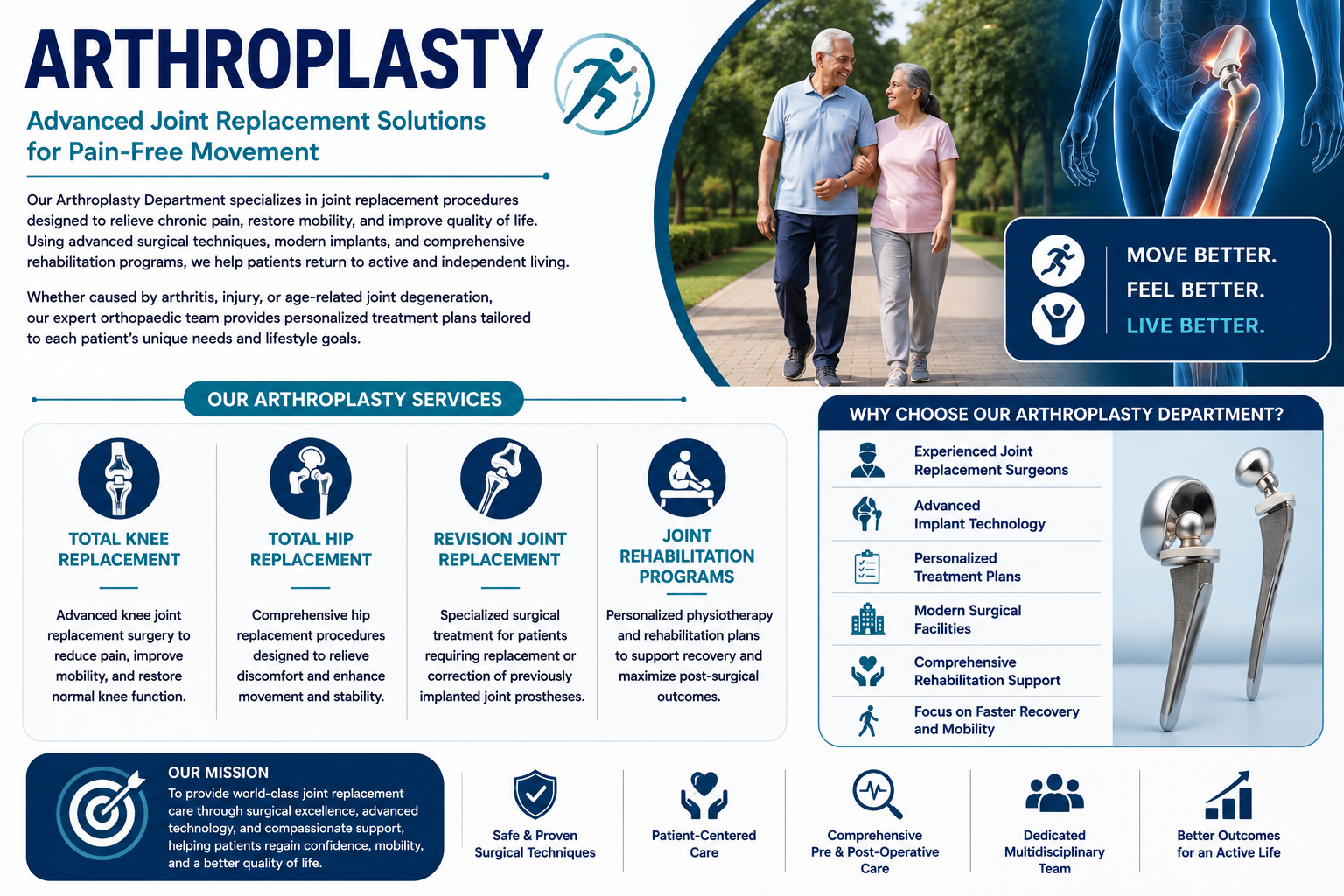
Arthroplasty: A Complete Guide to Joint Replacement Surgery
Joint pain can make everyday activities such as walking, climbing stairs, sitting, or even sleeping difficult. When medications, physiotherapy, and lifestyle changes no longer provide relief, arthroplasty, commonly known as joint replacement surgery, can offer a long-term solution.
Arthroplasty is one of the most successful orthopedic procedures performed worldwide, helping millions of people regain mobility, reduce chronic pain, and return to an active lifestyle.
What is Arthroplasty?
Arthroplasty is a surgical procedure in which a damaged or worn-out joint is repaired, resurfaced, or replaced with an artificial implant (prosthesis). The primary goal is to relieve pain, restore movement, and improve joint function.
The procedure is commonly performed on:
- Knee
- Hip
- Shoulder
- Elbow
- Ankle
- Finger joints
Among these, knee replacement and hip replacement surgeries are the most frequently performed.
Who Needs Arthroplasty?
Your orthopedic surgeon may recommend arthroplasty if you experience:
- Persistent joint pain
- Severe stiffness
- Difficulty walking
- Reduced range of motion
- Joint deformity
- Pain that interferes with sleep
- Failure of medications and physiotherapy
Conditions That May Require Arthroplasty
Several medical conditions can damage the joints over time, including:
Osteoarthritis
The most common reason for joint replacement. The cartilage gradually wears away, causing pain and stiffness.
Rheumatoid Arthritis
An autoimmune disease that causes chronic inflammation and joint destruction.
Post-Traumatic Arthritis
Joint damage following fractures or severe injuries.
Avascular Necrosis
Loss of blood supply to the bone leading to joint collapse.
Congenital Joint Disorders
Some people are born with joint abnormalities that worsen with age.
Types of Arthroplasty
Total Knee Replacement (TKR)
The damaged surfaces of the knee are replaced with metal and high-grade plastic components.
Recommended for:
- Severe arthritis
- Knee deformity
- Chronic knee pain
- Difficulty walking
Partial Knee Replacement
Only the damaged portion of the knee is replaced while preserving healthy bone and cartilage.
Benefits include:
- Smaller incision
- Faster recovery
- Better preservation of natural movement
Total Hip Replacement (THR)
The damaged hip socket and femoral head are replaced with artificial implants.
Common reasons include:
- Osteoarthritis
- Hip fractures
- Rheumatoid arthritis
- Hip avascular necrosis
Shoulder Replacement
Damaged portions of the shoulder joint are replaced to restore painless movement.
Ideal for:
- Severe arthritis
- Rotator cuff damage
- Complex fractures
Elbow Arthroplasty
Recommended for patients with severe arthritis or complex elbow injuries that cannot be repaired.
Symptoms That May Indicate You Need Joint Replacement
You should consult an orthopedic specialist if you have:
- Constant joint pain
- Swelling
- Stiffness
- Difficulty standing from a chair
- Trouble climbing stairs
- Walking with a limp
- Reduced flexibility
- Grinding sensation inside the joint
- Pain despite medication
Diagnosis Before Arthroplasty
The orthopedic surgeon may recommend:
- Physical examination
- X-rays
- MRI Scan
- CT Scan
- Blood investigations
- Joint function assessment
These help determine the severity of joint damage and identify the most suitable treatment plan.
How Arthroplasty Surgery is Performed
The procedure generally involves the following steps:
- Administration of anesthesia.
- Surgical incision over the affected joint.
- Removal of damaged cartilage and bone.
- Preparation of the joint surfaces.
- Placement of artificial implants.
- Verification of joint alignment and movement.
- Closure of the incision.
Modern surgical techniques and advanced implants have significantly improved outcomes and reduced recovery time.
Benefits of Arthroplasty
Patients often experience:
- Significant pain relief
- Improved joint movement
- Better mobility
- Increased independence
- Enhanced quality of life
- Improved posture and balance
- Better sleep
- Return to daily activities
- Long-lasting results
Many patients resume walking within a few days after surgery under guided rehabilitation.
Recovery After Arthroplasty
Recovery depends on:
- Age
- General health
- Type of surgery
- Physiotherapy compliance
Typical recovery timeline:
First Few Days
- Pain management
- Assisted walking
- Gentle exercises
First 6 Weeks
- Improved walking
- Reduced swelling
- Better flexibility
Three Months
Most patients resume normal daily activities comfortably.
Six Months to One Year
Complete healing and maximum improvement in strength and mobility.
Importance of Physiotherapy
Rehabilitation is essential for successful recovery.
Physiotherapy helps:
- Improve flexibility
- Strengthen muscles
- Restore joint movement
- Improve balance
- Prevent stiffness
- Speed recovery
Following your physiotherapist’s instructions greatly improves surgical outcomes.
Risks of Arthroplasty
Although arthroplasty is considered very safe, possible complications include:
- Infection
- Blood clots
- Implant loosening
- Joint stiffness
- Bleeding
- Nerve injury
- Dislocation (especially in hip replacement)
Choosing an experienced orthopedic surgeon significantly reduces these risks.
Tips for Faster Recovery
To ensure optimal healing:
- Perform prescribed exercises regularly.
- Take medications as directed.
- Attend follow-up appointments.
- Maintain a healthy weight.
- Eat a protein-rich balanced diet.
- Avoid smoking.
- Stay physically active within recommended limits.
- Use walking aids until advised otherwise.
Life After Joint Replacement
Most modern joint implants last 15–25 years or longer, depending on:
- Activity level
- Weight
- Implant type
- Overall health
Patients often return to:
- Walking
- Driving
- Office work
- Light exercise
- Swimming
- Cycling
- Gardening
- Travel
High-impact sports such as running or jumping may be discouraged to prolong implant life.
Why Choose Arthroplasty?
If chronic joint pain is affecting your quality of life, arthroplasty can provide lasting relief and restore independence. Advances in surgical techniques, minimally invasive procedures, and modern prosthetic implants have made joint replacement safer, more effective, and quicker to recover from than ever before.
Consult an experienced orthopedic surgeon to determine whether arthroplasty is the right treatment for your condition. Early diagnosis and timely intervention can help you return to a pain-free, active lifestyle.
Frequently Asked Questions (FAQs)
Is arthroplasty the same as joint replacement?
Yes. Arthroplasty is the medical term for surgery that repairs or replaces a damaged joint with an artificial implant.
How long does arthroplasty surgery take?
Most procedures take between 1 to 3 hours, depending on the joint being treated and the complexity of the surgery.
Is arthroplasty painful?
Pain is managed with modern anesthesia and medications. Most patients experience significant pain relief after recovery compared to their pre-surgery condition.
How soon can I walk after knee or hip replacement?
Many patients begin standing and walking with assistance within 24–48 hours after surgery, depending on their overall health and the surgeon’s recommendations.
How long do artificial joints last?
Modern implants typically last 15–25 years or longer with proper care and regular follow-up.
Can I exercise after arthroplasty?
Yes. Low-impact activities such as walking, swimming, and cycling are encouraged once your surgeon approves them, while high-impact sports may need to be avoided.
